What Is the True Cost of Care… Over Time?

During Lymphoedema Awareness Month, we often focus on understanding the condition — how it develops, how it progresses, and how it can be managed.
But there is another question that is just as important, and not always discussed:
What is the true cost of care… over time?
Looking beyond the initial price
When choosing products or support options for lymphoedema, it’s natural to focus on the upfront cost.
What does this cost today?
What is covered?
What is affordable right now?
But lymphoedema is not a short-term condition. It is something that is managed over weeks, months, and often years.
And that shifts the question from: “What does this cost?” to “What will this cost over time?”
The hidden cost of replacement and maintenance
Many lymphatic support solutions require:
regular replacement
ongoing purchasing
or repeated adjustment
Individually, these costs may seem small. But over time, they accumulate.
What appears more affordable at the beginning may not always remain so in the long run. At the same time, there are options designed to be:
washed
reused
and integrated into daily life
These may have a higher upfront cost, but a different long-term profile.
And this is where the idea of true cost becomes more meaningful.
Cost is not just financial
The real cost of care is not only measured in dollars.
It also includes:
time
effort
comfort
and consistency
Because lymphoedema management doesn’t happen once —it happens every day.
If something is difficult to use, uncomfortable to wear, or hard to maintain, that cost shows up in a different way.
When comfort affects consistency
One of the most important — and often overlooked — aspects of lymphoedema care is adherence.
Not just what works in theory, but what people can actually continue using over time.
Because even the most effective solution has limited impact if it is:
uncomfortable
impractical
or unrealistic to use daily
Comfort is not a luxury. It plays a direct role in:
how often something is worn
how long it is used
and whether it becomes part of a routine
And over time, that consistency is what supports better outcomes.
This long-term perspective is important, particularly when we consider that lymphoedema does not always appear immediately.
As explored in a previous article, the lymphatic system can compensate for years — even decades — before swelling becomes visible.
By the time lymphoedema presents, the system has often been working under increased load for a long time.
This makes the way we support it — consistently, gently, and sustainably — even more important.
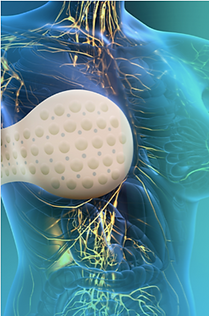
A more sustainable way to think about care
The lymphatic system itself is gentle, slow-moving, and responsive to subtle changes in movement and pressure.
It makes sense, then, that long-term support should reflect these same qualities.
Care that is:
wearable
breathable
easy to maintain
and comfortable is more likely to be sustained.
And in lymphatic care, sustainability matters.
Because the goal is not just short-term management —it is long-term support.
Bringing it back to the question
So when we think about lymphoedema care, it may be worth asking:
What is the true cost over time?
Not just financially —but in terms of:
usability
comfort
and long-term consistency
Because in the end, the most effective solution is not simply the one that works —it’s the one that people can live with, day after day.
A shift in perspective
Awareness is not just about recognising lymphoedema.
It’s about understanding what sustainable care really looks like.
And sometimes, that begins with asking a different question.
💙 Go with the flow.


